
Chandi Heffner, born Charlene Gail Heffner in 1953, became the legally adopted daughter of billionaire heiress Doris Duke after a modest upbringing and a life shaped by faith. Her unique journey brought her into one of America’s most famous fortunes.
Following Doris Duke’s death, Chandi became involved in a high-profile legal dispute over the estate but later focused on philanthropy in Hawaii and India. Today, she is remembered for her charitable work and compassionate legacy as much as her connection to the Duke fortune.
Chandi Heffner Profile Summary
Before diving into the full story, here is a quick snapshot of Chandi Heffner’s key biographical details:
| Detail | Information |
| Full Name | Charlene Gail Heffner |
| Known As | Chandi Heffner |
| Date of Birth | August 26, 1953 |
| Place of Birth | Baltimore, Maryland, USA |
| Age (as of 2025) | 71 years old |
| Nationality | American |
| Ethnicity | Caucasian |
| Religion | Catholic upbringing with Hindu spiritual influence |
| Zodiac Sign | Virgo |
| Profession | Philanthropist, Humanitarian |
| Famous For | Being the adopted daughter of Doris Duke |
| Adopted Parent | Doris Duke |
| Biological Parents | William Heffner and Barbara “Bunny” Heffner |
| Siblings | Claudia Heffner Peltz, Arden Cromwell |
| Marital Status | Divorced |
| Children | None |
| Current Residence | Hawaii, USA |
| Net Worth (2025) | ~$20 million |
| Notable Work | Founder of CDHIF USA Foundation |
Chandi Heffner’s profile is a fascinating blend of privilege and purpose. While much of the world came to know her name through the headlines surrounding Doris Duke and a high-profile inheritance battle, her biography tells a richer and far more nuanced story. She is a woman who chose compassion over bitterness and service over spectacle — traits that define her more accurately than any courtroom controversy ever could.
Early Life and Family Background
Chandi Heffner was born on August 26, 1953, in Baltimore, Maryland, to William Heffner and Barbara “Bunny” Heffner. She grew up in a close-knit Catholic household alongside her two sisters — Claudia Heffner, who later became a model and married billionaire businessman Nelson Peltz, and Arden Cromwell. Despite the very different paths each sister would take, their childhood was grounded in shared values of faith, discipline, and kindness.
The Heffner family lived modestly by most measures. There were no grand estates, no trust funds, and no silver spoons — just a warm, nurturing home that laid a foundation of strong character. Chandi’s early years gave her a sense of humility that would remain part of her identity even after she stepped into one of America’s most glamorous and wealthy households. Her upbringing in Baltimore was quiet and conventional, but her inner curiosity was anything but ordinary.
From a very young age, Chandi showed a deep passion for artistic expression. Dance — particularly belly dancing — became one of her greatest outlets. This love for movement and rhythm would not only shape her personal identity but also serve as the unexpected bridge that would one day connect her to Doris Duke. Her early artistic pursuits reflected an intuitive, expressive nature that would later flourish through spiritual practice and humanitarian dedication.
Spiritual Awakening and Name Transformation
In the early 1970s, Chandi Heffner experienced a profound spiritual awakening that would permanently alter the direction of her life. While living in Hawaii, she became deeply involved with the Hare Krishna movement, embracing its teachings on compassion, mindfulness, devotion, and service. Eastern philosophy and spiritual practice became her anchor, giving her a sense of purpose that went far beyond the material world.

It was during this transformative period that she adopted the name “Chandi” — a word derived from Sanskrit meaning “divine feminine energy” or “powerful goddess.” The name was not simply a label; it was a declaration of identity. By choosing the name Chandi, she signaled a rebirth — a conscious step away from an ordinary life and toward something deeply intentional and spiritually rich. The transformation was profound and sincere, touching every aspect of how she saw herself and her place in the world.
This spiritual foundation would shape every major decision she made in the years that followed. Her values — rooted in service, empathy, and inner peace — guided her through moments of great privilege and equally great adversity. The Hare Krishna philosophy taught her to see beyond the ego and to seek meaning through selfless giving, a lesson that would eventually define her legacy far more powerfully than any inheritance ever could.
Meeting Doris Duke
The story of how Chandi Heffner and Doris Duke first crossed paths is almost cinematic in its simplicity. The two women were connected through their shared belly dancing instructor, Bobby Farrah, during the 1980s. When Chandi suffered a knee injury that temporarily sidelined her from dancing, Doris Duke — then in her seventies and known for her warmth toward people she trusted — extended an extraordinary gesture of kindness by inviting Chandi to recuperate at her stunning Honolulu estate, Shangri-La.
What began as a casual, compassionate invitation grew into something far deeper. During Chandi’s recovery, the two women spent significant time together, sharing conversations about spirituality, life, and purpose. Doris Duke, who was known to be intensely private and often lonely despite her vast fortune, found an unexpectedly kindred spirit in Chandi. Their shared love of dance, their spiritual sensibilities, and Chandi’s warm, calm personality created an emotional connection that neither of them had anticipated.
For Doris Duke, the bond quickly became something profoundly personal. She had never recovered emotionally from the loss of her only biological daughter, Arden, who was born prematurely in 1940 and lived only one day. Duke reportedly came to believe that Chandi embodied the spirit of the child she had lost — a deeply felt, spiritually motivated connection that would eventually lead to one of the most unusual and talked-about adoption decisions in American history.
Adoption by Doris Duke
In 1988, Doris Duke made a decision that stunned her inner circle, her legal advisors, and the American public: she legally adopted Chandi Heffner, who was 35 years old at the time. Duke herself was 75. Adult adoptions of this nature were extraordinarily rare, and the financial implications were immense given Duke’s estimated fortune of over one billion dollars. To many observers, the move seemed impulsive or even suspicious; to those who knew the two women, it reflected a genuine emotional need on Duke’s part.
For Doris Duke, the adoption was a deeply personal and heartfelt act. She longed for a daughter, and after years of searching for that connection, she felt she had found it in Chandi. The adoption provided Chandi with the legal status of Duke’s daughter, granting her access to Duke’s world of luxury, international travel, and philanthropic influence. For a woman who had grown up modestly in Baltimore, the shift was as dramatic as it was sudden.
The public and media reaction was immediate and intense. Tabloids and news outlets dissected the adoption from every angle, questioning motives, speculating about financial arrangements, and casting doubt on the sincerity of their bond. Despite the scrutiny, both women maintained that their relationship was genuine and meaningful. For a time, their arrangement gave Doris Duke the sense of family she had always craved — and gave Chandi a role she embraced with loyalty and care.
Life as Doris Duke’s Daughter
Following the formal adoption, Chandi Heffner stepped into an entirely new world. She became a regular presence at Duke’s legendary estates, including Shangri-La in Honolulu and Rough Point in Newport, Rhode Island. The two women traveled internationally, participated in philanthropic endeavors, and developed a life together that, by most accounts, was filled with genuine affection and shared purpose in its early years.
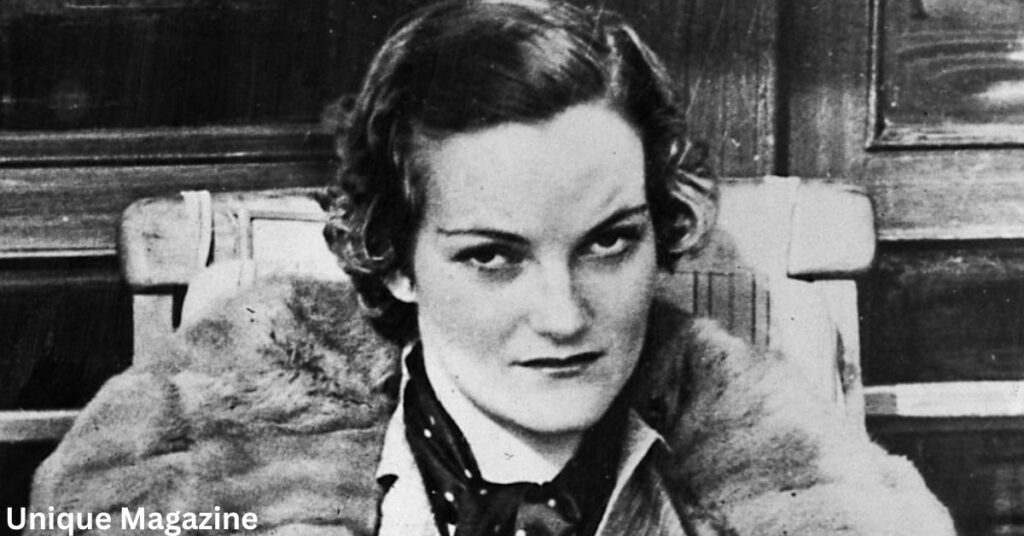
Chandi adapted to the demands of life in the spotlight with relative grace. She accompanied Doris to social events, engaged with Duke’s extensive network of friends and advisors, and took an active interest in the causes that mattered to Duke. Animal welfare, art preservation, and community support were among the shared interests that brought the two women together in meaningful ways. Their bond extended beyond luxury — it was rooted in values they genuinely shared.
However, life within Duke’s orbit was far from uncomplicated. Duke’s advisors, long-time friends, and estate managers viewed Chandi with skepticism and, in some cases, open hostility. Concerns about her influence over Duke and her access to the heiress’s resources created an atmosphere of tension that grew over time. The very closeness that had led to the adoption now became a source of conflict, as those around Duke questioned the nature of Chandi’s intentions and her role within the household.
Read More : Who Is Mitchell Moranis? All You Need To Know About Rick Moranis’ Son
Legal Disputes and Inheritance Battle
The relationship between Chandi Heffner and Doris Duke began to unravel around 1991, when Duke took the dramatic step of legally revoking the adoption and removing Chandi entirely from her will. The reasons behind the revocation were never made fully public, but it was widely reported that personal disagreements, the influence of Duke’s advisors, and growing tensions within the household all played a role. For Chandi, the revocation was a devastating blow — both emotionally and financially.
When Doris Duke passed away on October 28, 1993, at the age of 81, she left behind an estate worth an estimated $1.2 billion. Her final will directed virtually all of her fortune to existing and newly created charitable foundations. Chandi was explicitly excluded, with Duke’s final will even containing language questioning Chandi’s motives. The public fallout was enormous, and legal proceedings quickly followed.
Chandi contested the will, arguing that she had been manipulated out of her rightful inheritance and that Duke had not been of sound mind when key decisions were made. The legal battle attracted national media attention and became one of the most discussed inheritance disputes of the 1990s. In a case that raised complex questions about family, loyalty, and the nature of wealth, both sides eventually agreed to resolve the matter out of court. In 1996, Chandi received a settlement of approximately $65 million — a significant sum, but only a fraction of what she might have received had the adoption never been revoked.
Personal Life and Relationships
Chandi Heffner’s personal life has attracted nearly as much curiosity as her connection to Doris Duke. She developed a well-known friendship with actor Paul Reubens, best remembered for his role as Pee-wee Herman. In 1989, the two staged a playful mock wedding at a dinner party, which tabloids quickly reported as though it were a genuine marriage. In reality, the event was a lighthearted social occasion with no legal standing whatsoever.
Chandi also had a romantic relationship with James Burns, a former bodyguard employed by Doris Duke. That relationship later resulted in a legal dispute over financial support, adding yet another chapter to an already eventful personal history. Over time, Chandi withdrew from the social circles that had defined her life during the Duke years, choosing instead a quieter, more grounded way of living.
As of today, Chandi Heffner is divorced and has no children. Her personal journey reflects someone who, after experiencing enormous upheaval in her relationships, ultimately found greater peace in solitude, spiritual practice, and service to others than in the pursuit of romance or public companionship. Those who know her describe a woman of quiet warmth, genuine care, and deep emotional intelligence — someone who learned her hardest lessons and chose to grow rather than grieve.
Philanthropy and Humanitarian Work
After the legal settlement was finalized in 1996, Chandi Heffner made a choice that surprised many who had followed her story: she walked away from the spotlight entirely and redirected her energy toward helping others. In 1998, she founded CDHIF USA, a nonprofit organization headquartered in Waimea, Hawaii. The foundation was built on the principle that wealth should be used as a force for good, not merely as a measure of social status.
CDHIF USA focuses on three primary areas of impact: medical aid for underserved communities, animal welfare and rescue, and humanitarian outreach. The foundation operates programs in Hawaii and extends its reach to parts of India, where Chandi has maintained a connection through her decades-long spiritual practice. Her ranch in Waimea has become a sanctuary for rescued horses, dogs, and other animals in need — a living expression of her belief in the dignity of all living beings.
Chandi’s philanthropic model is deeply personal. Rather than writing checks from a comfortable distance, she is known to be directly involved in the day-to-day operations of her foundation, personally caring for the animals on her ranch and maintaining close relationships with the communities she serves. Her approach blends the compassion of Eastern spiritual teaching with practical, boots-on-the-ground humanitarian action that has made a measurable difference in the lives of those she has helped.
Public Image and Media Portrayal
When Chandi Heffner first entered public consciousness in the late 1980s, the media portrayed her almost exclusively through the lens of controversy. Headlines focused on the unusual adoption, her access to Duke’s fortune, and the whirlwind legal battles that followed Duke’s death. She was frequently characterized as mysterious, opportunistic, or manipulative — labels that stuck long after the facts had become far more complicated than any tabloid narrative could capture.
Over the course of the 1990s and 2000s, public perception gradually began to shift. As details of her philanthropic work became better known, and as her deliberate retreat from fame became evident, many observers began to reassess their earlier assumptions. The woman who had once been portrayed as an interloper in Duke’s world was now more accurately seen as someone who had endured enormous public scrutiny and emerged with her values intact.
Today, Chandi Heffner is widely respected within the communities she serves in Hawaii and India. Those who interact with her through her foundation consistently describe a person of genuine warmth, deep spiritual grounding, and sincere commitment to service. Her story serves as a compelling example of how a public narrative can be entirely rewritten — not through a press campaign or a carefully managed image, but simply through the quiet, consistent force of doing good work over many years.
Current Life in Hawaii and Legacy
Now in her early seventies, Chandi Heffner leads a life that looks nothing like the one that once dominated American tabloids. She divides her time between her ranch in Waimea, Hawaii — where she cares for rescued animals and manages the operations of CDHIF USA — and India, where she continues to deepen her spiritual practice and support humanitarian outreach programs. Her days are shaped by meditation, nature, purposeful work, and the kind of quiet contentment that can only come from living in alignment with one’s values.
Her Hawaiian ranch has become more than a personal retreat. It functions as a sanctuary — for animals, for people seeking help through her foundation, and for Chandi herself as a place of healing and renewal. Those who visit describe an environment of calm and care, a space where purpose and peace coexist naturally. It is a far cry from the grand estates of Doris Duke’s world, and that is precisely the point.
The legacy that Chandi Heffner is building is not one of wealth or social prestige. It is one of transformation — of a woman who faced extraordinary circumstances, absorbed profound losses, and chose to respond with generosity rather than bitterness. She has become, quietly and without fanfare, one of the more meaningful philanthropic figures in Hawaiian community life. Her story is a reminder that true legacy is always built one compassionate act at a time.
Chandi Heffner Net Worth
As of 2025, Chandi Heffner’s estimated net worth stands at approximately $20 million. The foundation of this wealth was the legal settlement she received in 1996 following her dispute with the estate of Doris Duke — a settlement worth approximately $65.8 million. Over the decades since, a combination of investment, responsible financial management, and charitable expenditure has shaped her current financial position.
| Source | Details |
| Legal Settlement (1996) | ~$65.8 million from Doris Duke’s estate |
| Estimated Net Worth (2025) | ~$20 million |
| Primary Use of Wealth | Funding CDHIF USA Foundation, animal rescue, humanitarian aid |
| Lifestyle | Modest; ranch in Waimea, Hawaii |
| Financial Philosophy | Wealth as a tool for compassion, not personal luxury |
What distinguishes Chandi Heffner’s relationship with money is not the amount she received but the intentionality with which she has used it. Rather than living extravagantly or chasing the social status her settlement could easily have afforded her, she channeled the bulk of her resources into her foundation and the causes she cares about most. Her financial story is ultimately one of purpose over possession — a fitting conclusion to a life that has consistently prioritized meaning over material wealth.
Lessons and Legacy
The life of Chandi Heffner offers lessons that reach far beyond the details of any inheritance dispute or tabloid headline. Her journey from a modest Baltimore Catholic household to the estates of a billionaire, and ultimately to a quiet Hawaiian ranch dedicated to service, maps out a remarkable arc of human resilience and personal evolution. What she experienced — both the privilege and the pain — would have broken many people. Instead, it shaped her into someone of genuine depth and purpose.
One of the most powerful lessons her story teaches is that identity is chosen, not inherited. Chandi could have defined herself entirely by her connection to Doris Duke, or by the fortune she lost, or by the legal battles she fought. She chose instead to define herself by what she built — a foundation, a community, a way of living that reflects her deepest values. That choice took courage, and it took time, but it proved to be the most enduring decision of her life.
Her legacy also speaks to the relationship between wealth and responsibility. Chandi received an enormous settlement that could have been spent in any number of ways. She chose to use it as a platform for compassion. In doing so, she quietly transformed the narrative of her own life — from a figure of controversy into a figure of integrity. That transformation is perhaps her greatest achievement, and its impact continues to ripple outward through every life her foundation touches.
Final Thoughts
Chandi Heffner’s story is unlike almost any other in modern American life. She is a woman who navigated the dizzying heights of inherited wealth, survived a very public fall from grace, and rebuilt herself entirely on her own terms. The name Chandi Heffner will forever be linked to Doris Duke — but that link is only the beginning of who she is. The deeper story belongs to a woman who found purpose in service, peace in spirituality, and legacy in the quiet, consistent work of making the world a little kinder.
Whether you know her name from the headlines of the 1990s or are encountering her story for the first time, Chandi Heffner’s life offers something genuinely valuable: the reminder that how we choose to respond to our circumstances always matters more than the circumstances themselves. Her life is proof that transformation is possible at any stage — and that the most meaningful legacy is always the one built with love.
FAQs
Who is Chandi Heffner?
Chandi Heffner, born Charlene Gail Heffner on August 26, 1953, in Baltimore, Maryland, is an American philanthropist best known as the legally adopted daughter of tobacco heiress Doris Duke. She is the founder of CDHIF USA, a nonprofit organization providing medical aid and animal welfare support in Hawaii and India.
Why did Doris Duke adopt Chandi Heffner?
Doris Duke adopted Chandi Heffner in 1988 because she believed Chandi embodied the spirit of her late daughter Arden, who died shortly after birth in 1940. Their shared spiritual beliefs, love of belly dancing, and deep emotional bond led Duke to formalize their relationship through legal adult adoption.
How old is Chandi Heffner?
Chandi Heffner was born on August 26, 1953, which makes her 71 years old as of 2025. She remains active in her philanthropic work and continues to live quietly in Hawaii.
What happened between Chandi Heffner and Doris Duke?
Their relationship deteriorated around 1991, when Duke revoked the adoption and removed Chandi from her will amid personal disagreements and pressure from advisors. After Duke’s death in 1993, Chandi contested the will and settled the legal dispute in 1996 for approximately $65 million.
What is Chandi Heffner’s net worth in 2025?
Chandi Heffner’s estimated net worth in 2025 is approximately $20 million, derived primarily from the legal settlement she received from the Doris Duke estate following Duke’s death in 1993.
Did Chandi Heffner inherit Doris Duke’s fortune?
No, Chandi Heffner did not inherit Doris Duke’s fortune directly. Duke’s final will excluded her and directed the estate to charitable foundations. Chandi contested the will and received an out-of-court settlement of around $65.8 million in 1996.
Where does Chandi Heffner live now?
Chandi Heffner currently lives in Waimea, Hawaii, where she manages her ranch and oversees her nonprofit foundation, CDHIF USA. She also spends time in India, where she continues her spiritual practice and supports humanitarian outreach programs.
What is the CDHIF USA Foundation?
CDHIF USA is a nonprofit organization founded by Chandi Heffner in 1998 in Waimea, Hawaii. The foundation focuses on providing medical aid, animal rescue and welfare, and community support to people and animals in need, with programs in both Hawaii and India.
Did Chandi Heffner marry Paul Reubens?
No, Chandi Heffner and Paul Reubens — best known as Pee-wee Herman — were never legally married. In 1989, they participated in a playful mock wedding at a dinner party, which was widely misreported by the media as an actual marriage. The event had no legal standing.
What is Chandi Heffner’s spiritual background?
In the early 1970s, Chandi became deeply involved with the Hare Krishna movement while living in Hawaii. She adopted the name “Chandi,” a Sanskrit word meaning “divine feminine energy.” Eastern philosophy and spiritual practice have remained central to her identity and guide her philanthropic work to this day.

Lisa George is a dedicated celebrity blog writer with 4 years of experience covering entertainment news, celebrity biographies, net worth, lifestyle, and trending stories. She is passionate about creating accurate, engaging, and SEO-friendly content that keeps readers informed and entertained. Lisa combines thorough research with compelling storytelling to deliver high-quality articles that resonate with audiences and provide trustworthy celebrity insights.