
Time isn’t the only function of a good watch.It can sharpen a casual outfit, complete a suit, or become a practical tool for workouts and travel. In 2026, you have more choices than ever, from traditional mechanical watches to advanced smartwatches packed with health and fitness features.
The right choice depends on your lifestyle, budget, wrist size, and personal taste. This guide covers the major styles and explains what to look for before you buy. Whether you want something elegant for the office, rugged for outdoor adventures, or smart enough to track your daily activity, you’ll find useful options here.
Best Watch Styles for Men in 2026
Traditional styles remain popular because they offer something a smartwatch can’t quite replicate. Dress watches look refined with formal clothing, field watches suit everyday outfits, and dive watches bring a rugged character to casual wear. Chronographs are another popular option if you like a more technical appearance.
Smartwatches have also become a major part of the market. They combine timekeeping with notifications, GPS, fitness tracking, sleep monitoring, and other connected features. For many buyers, the decision now comes down to whether they prefer the craftsmanship of a traditional timepiece or the convenience of a connected device.
How to Choose the Right Watch for Men
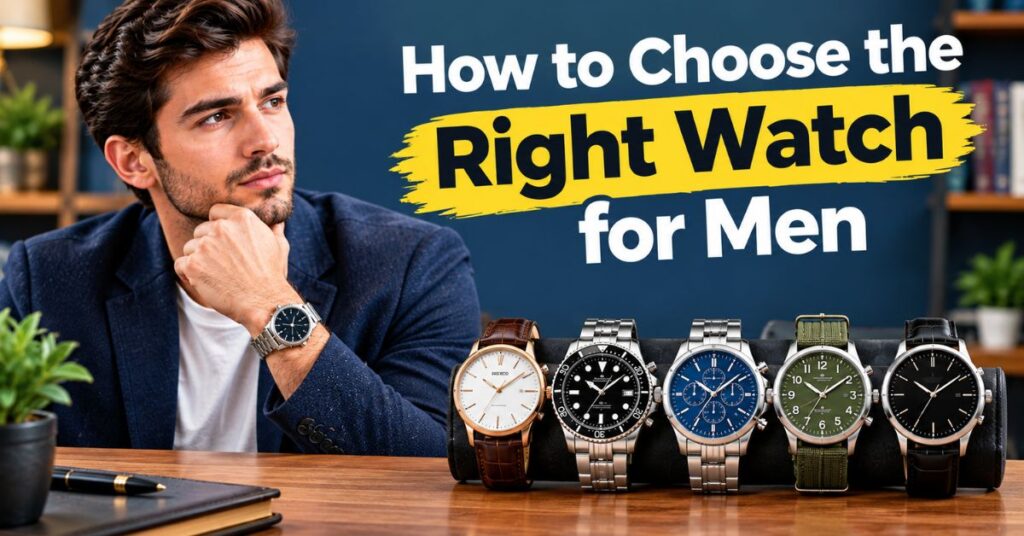
Start with how you’ll actually use it. If you need something for business meetings and dinners, a slim dress watch with a clean dial makes sense. For daily wear, look for a comfortable case, durable crystal, useful water resistance, and a strap or bracelet that works with different outfits.
Size matters too. A large case can look impressive but may feel uncomfortable on a smaller wrist. Consider the case diameter, thickness, lug-to-lug length, and strap width rather than focusing only on the number printed on the box. Your budget matters as well, so decide how much you’re comfortable spending before you fall in love with a model outside your range.
Best Watches for Everyday Wear
For everyday use, versatility is king. A simple three-hand design, moderate case size, neutral dial, and steel bracelet can work with jeans, business-casual clothing, and even a blazer. Quartz models are especially convenient because they’re accurate and require little day-to-day attention.
A smartwatch can be equally practical if you want more functionality. Modern Apple Watch models, for example, combine notifications, workouts, GPS, sleep tracking, heart-rate monitoring, and smartphone integration. Apple’s current comparison information lists models including the Apple Watch Series 12, Series 11, SE 3, Ultra 4, and Ultra 3, although exact availability can differ by region.
Read out This Artical: Who Is Paul Cerrito? 7 Shocking Facts About Yasmine Bleeth’s Husband!
Best Watches for Formal Occasions
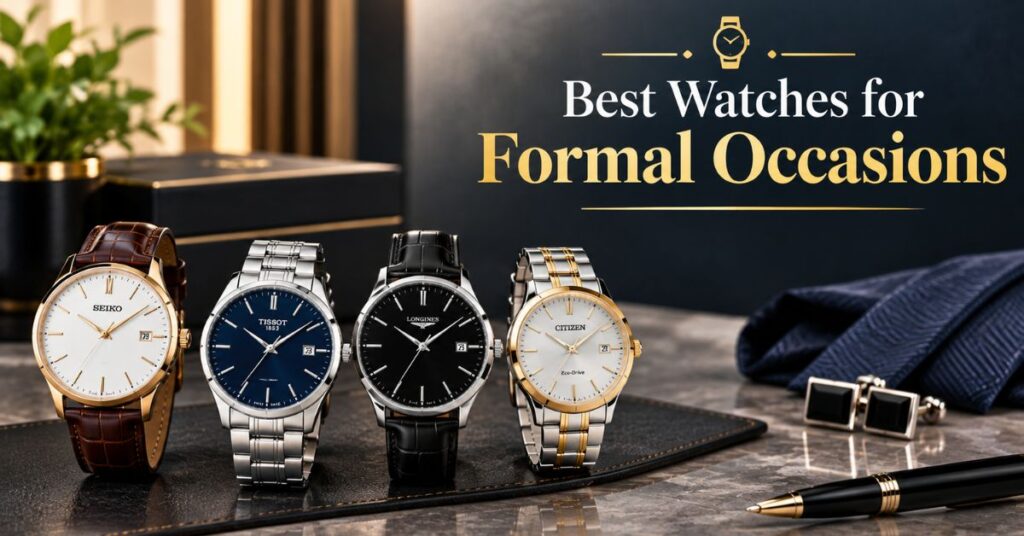
Formal occasions call for restraint. A thin case, clean dial, simple markers, and leather strap usually create a more sophisticated appearance than a bulky sports design. Silver, black, white, and deep blue dials are particularly easy to pair with formal clothing.
Think of a dress watch as the punctuation mark at the end of an outfit. It shouldn’t overpower your suit or draw attention away from you. A mechanical movement can add an appealing sense of tradition, while a quartz movement gives you accuracy and simplicity without demanding much maintenance.
Best Sports Watches for Active Men
If you’re running, cycling, swimming, hiking, or training regularly, prioritize function over decoration. Look for reliable GPS, strong water resistance, a readable display, durable construction, comfortable straps, and battery life that can handle your longest workouts.
Smart sports watches can add another layer of useful information. Depending on the model, you may get heart-rate monitoring, workout metrics, sleep tracking, training data, route navigation, and recovery-related information. If you spend time outdoors, a bright display and physical controls can also make a major difference when you’re moving.
Best Luxury Watches for Men
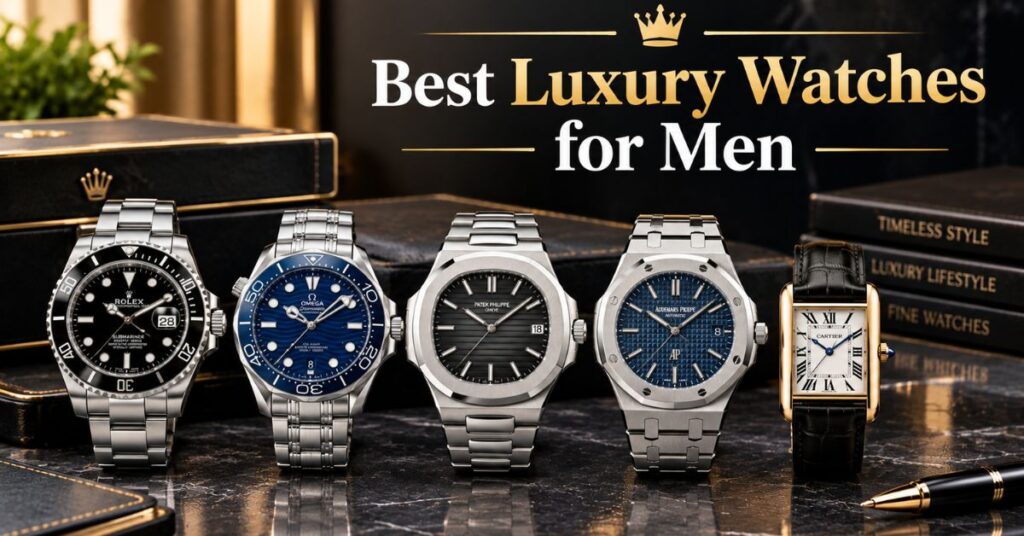
Luxury watches appeal to buyers who appreciate mechanical engineering, finishing, materials, and brand history. Instead of simply buying the most expensive model you can afford, consider what actually interests you. You might value an in-house movement, hand finishing, a distinctive case design, or a particular type of complication.
Materials can also influence both appearance and ownership experience. Stainless steel is versatile and durable, titanium can reduce weight, and precious metals create a very different visual character. Luxury buying is personal, so choose a design you’ll still enjoy after the novelty of the purchase has disappeared.
Best Affordable Watches for Men
You don’t need a huge budget to get a reliable and attractive timepiece. Affordable quartz watches often provide excellent accuracy and low maintenance. Entry-level mechanical watches can also be appealing if you enjoy the movement and traditional craftsmanship.
When shopping at a lower price point, concentrate on fundamentals. Check the case quality, crystal type, movement reputation, water resistance, bracelet or strap quality, and availability of replacement parts. A simple well-made design will usually age better than a complicated watch loaded with features you don’t need.
Best Watch Brands to Consider in 2026
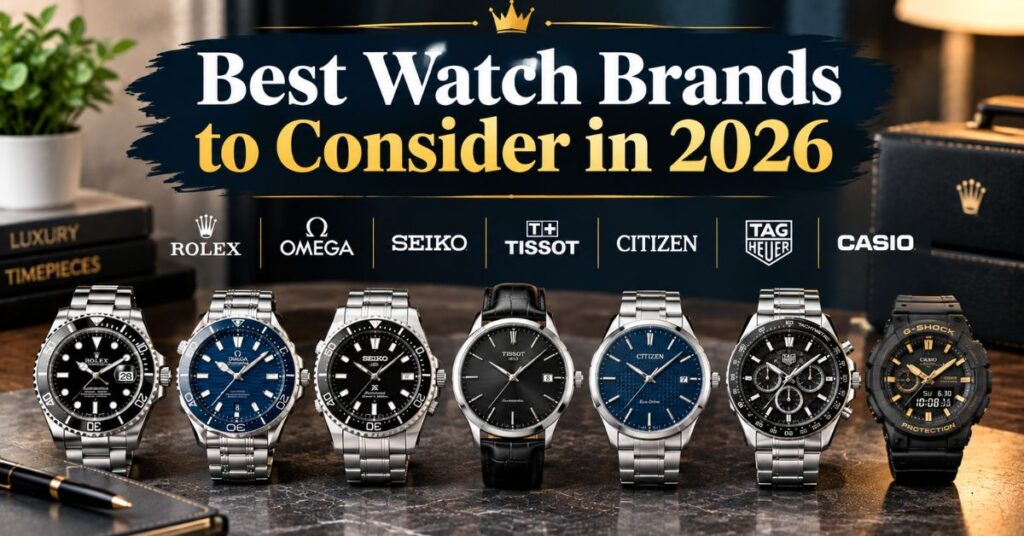
The best brand for you depends on what you value. Some companies specialize in affordable quartz watches, while others focus on mechanical movements, dive watches, luxury pieces, or connected technology. Comparing several brands can reveal significant differences in design, servicing, materials, and pricing.
Apple is particularly relevant if you’re looking for a smartwatch that works closely with an iPhone. Current Apple documentation says the Series 11, SE 3, and Ultra 3 require an iPhone 11 or later with iOS 26 or later.
For shoppers researching the watch market more broadly, established Japanese, Swiss, German, American, and smartwatch brands all offer different approaches. Don’t choose based on the logo alone. Compare the specifications, warranty, service network, movement, materials, and long-term practicality.
Important Watch Features to Look For
Features should support the way you use the watch rather than simply make the specification sheet look impressive. For a traditional model, pay attention to movement type, case material, crystal, water resistance, power reserve, bracelet quality, and case dimensions. For a smartwatch, screen quality, sensors, battery performance, connectivity, storage, and software support matter more.
If you’re considering an Apple Watch, the current lineup provides a useful example of how specifications can vary. Apple’s comparison pages show differences in case sizes, materials, displays, brightness, health features, and connectivity. The Apple Watch Series 11, for example, comes in 42mm and 46mm sizes, while the Ultra line uses a 49mm titanium case.
| Feature | Traditional Watch | Smartwatch |
| Movement | Quartz or mechanical | Electronic processor |
| Battery | Months to years or mechanical power reserve | Usually requires regular charging |
| Notifications | No | Yes |
| GPS | Usually unavailable | Common on modern models |
| Health tracking | Limited | Extensive on many models |
| Water resistance | Varies | Varies by model |
| Style | Classic and timeless | Modern and technology-focused |
| Maintenance | Battery changes or servicing | Charging and software updates |
Apple Watch Buying Guide
If you’re trying to compare Apple Watch models, start with the features you actually need. The SE 3, for example, offers an aluminum case, 40mm or 44mm sizes, an always-on Retina display, 64GB storage, health and workout functions, and up to 18 hours of normal battery life according to Apple’s specifications.
The more advanced models add different combinations of materials, display brightness, sensors, health capabilities, and outdoor-focused features. Apple’s comparison information currently lists up to 2,000 nits for Series 11, 3,000 nits for Ultra 3, and 1,000 nits for SE 3.
When considering an Apple Watch comparison, don’t automatically assume the newest or largest model is necessary. Think about whether you need cellular connectivity, advanced fitness tracking, a brighter display, a titanium case, longer battery performance, or extra outdoor capabilities.
Apple Watch Comparison Chart
| Model | Case Sizes | Case Material | Display Brightness | Typical User |
| Apple Watch Series 12 | 42mm / 46mm | Aluminum, titanium, or ceramic | Up to 2,000 nits | Everyday users |
| Apple Watch Series 11 | 42mm / 46mm | Aluminum or titanium | Up to 2,000 nits | Everyday use and fitness |
| Apple Watch SE 3 | 40mm / 44mm | Aluminum | Up to 1,000 nits | Value-focused buyers |
| Apple Watch Ultra 4 | 49mm | Titanium | Up to 3,000 nits | Sports and adventure |
| Apple Watch Ultra 3 | 49mm | Titanium | Up to 3,000 nits | Outdoor and endurance users |
Apple’s current comparison page lists these models and their respective display and case specifications. Features, configurations, and availability can vary by market.
If you’re wondering which Apple Watch should I buy, compatibility is another important factor. Apple’s support documentation currently lists iPhone 11 or later with iOS 26 or later for Series 11, SE 3, and Ultra 3.
Health features deserve careful interpretation, too. Apple lists functions such as heart-rate notifications, ECG on supported models, sleep tracking, sleep-apnea notifications, and other wellness features. These features aren’t a substitute for professional medical advice, and availability can depend on region and regulatory approval.
How to Care for Your Watch
Good care starts with simple habits. Keep the case and bracelet clean, avoid unnecessary impacts, and follow the manufacturer’s water-resistance guidance. Water resistance isn’t permanent because seals can deteriorate with age, impacts, and repeated exposure.
Traditional mechanical watches should receive professional servicing according to the manufacturer’s recommendations. Quartz watches may eventually need a battery replacement. Smartwatches require regular charging and software updates, while their bands and sensors should be kept clean, especially after exercise.
FAQs
What type of watch is best for everyday wear?
A versatile quartz, automatic, or smartwatch can work well for everyday use. Choose based on your preferred style, maintenance needs, and desired features.
How do I choose the right watch size?
Measure your wrist and consider both case diameter and thickness. Smaller wrists often suit compact cases, while larger wrists can accommodate bigger designs.
Are smartwatches better than traditional watches?
They serve different purposes. Smartwatches offer connectivity, fitness tracking, and notifications, while traditional watches emphasize design, craftsmanship, simplicity, and long-term ownership.
What should I look for in a sports watch?
Focus on durability, water resistance, GPS, battery life, readability, comfort, and workout features. For outdoor activities, navigation and physical controls can also be valuable.
How much should I spend on a good watch?
There’s no single correct budget. Set an amount you can comfortably afford and prioritize quality, reliability, comfort, and features over prestige.
Conclusion
Choosing the right watch in 2026 is less about finding one universally perfect model and more about matching the timepiece to your lifestyle. A slim dress watch can make formal clothing feel complete, while a rugged sports model may be a better companion for outdoor adventures. Smartwatches add another dimension with health, fitness, communication, and navigation features.
Take your time before buying. Compare the case size, movement, materials, display, battery performance, water resistance, connectivity, and long-term maintenance. Whether you choose a classic mechanical design or the latest Apple Watch, the best purchase is one that fits your wrist, your routine, and your personal style.

Lisa George is a dedicated celebrity blog writer with 4 years of experience covering entertainment news, celebrity biographies, net worth, lifestyle, and trending stories. She is passionate about creating accurate, engaging, and SEO-friendly content that keeps readers informed and entertained. Lisa combines thorough research with compelling storytelling to deliver high-quality articles that resonate with audiences and provide trustworthy celebrity insights.